
Authentic Guachinches in Tenerife: What They Are & Where to Start
A practical guide to Tenerife's genuine guachinches: how to recognise one, what to order and 10 places in the official island directory to check before you go.
Some links in this guide are affiliate links: if you book through them we may earn a commission at no extra cost to you. It never changes what we recommend. Full disclosure.
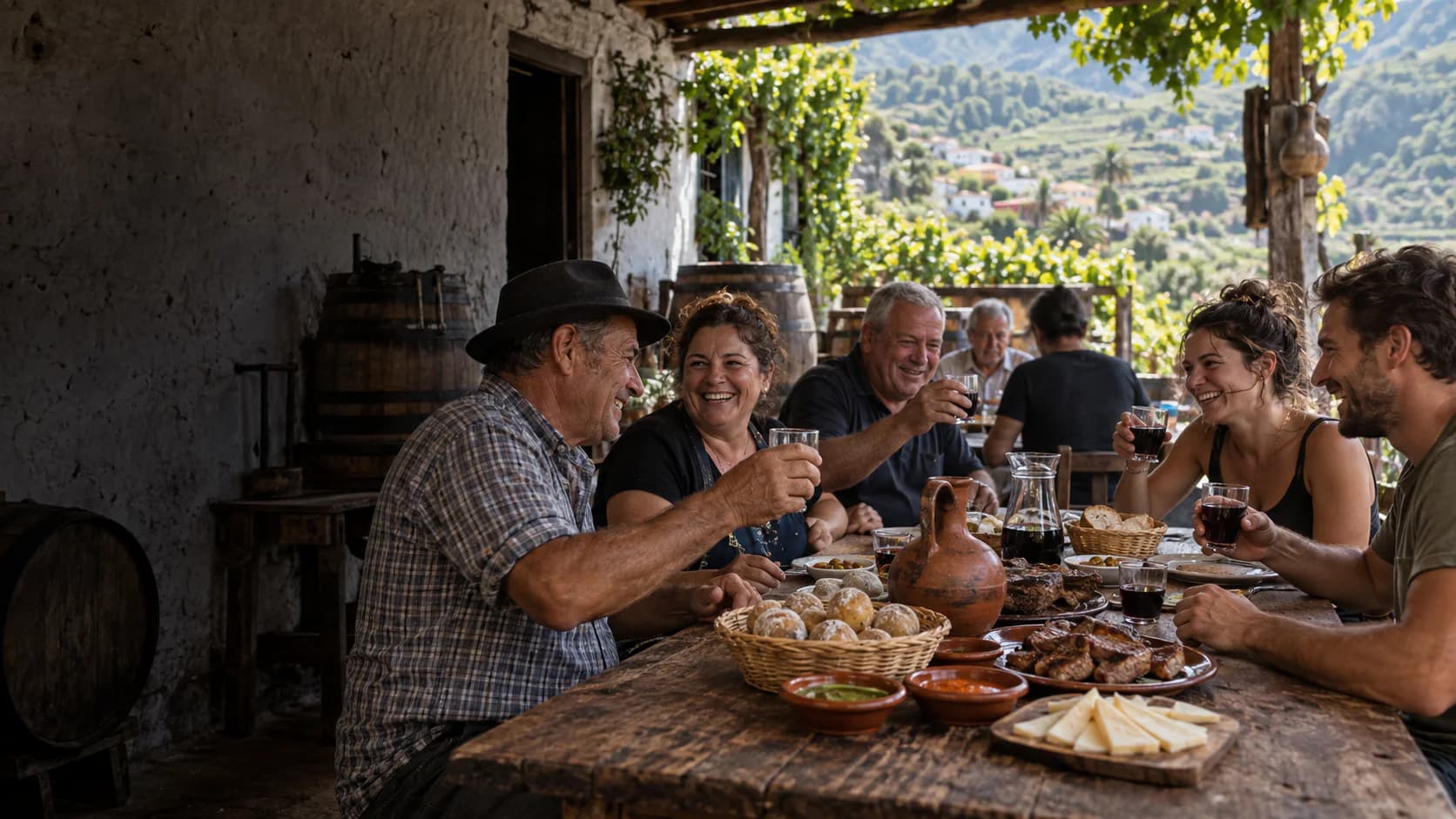
What makes a guachinche authentic?
The useful distinction is legal as well as cultural. Under Canary Islands rules, a guachinche is a temporary outlet where a winegrower sells wine from their own harvest in or beside the home, winery or agricultural property, accompanied by a deliberately limited food offer. The 2019 hospitality law keeps guachinches separate from restaurants and bars and restricts the name to businesses that qualify. In everyday Tenerife usage the label is sometimes stretched, so rustic decor, cheap meat and a handwritten sign are clues—not proof.
Where to look in Tenerife
Start in the wine belt of the north rather than around the southern resorts. Santa Úrsula is singled out by Tenerife's official tourism site for its concentration of guachinches; La Orotava, La Victoria, La Matanza, Los Realejos and La Guancha are also practical hunting grounds. A car gives you the most freedom, but whoever drives should treat house wine as a tasting, not the purpose of the afternoon.
10 official-directory starting points
These are starting points, not a permanent 'best of' ranking. All appeared in Tenerife's official guachinche directory when this guide was checked on 8 September 2026. Seasonal openings, ownership and service days can change, so confirm directly before making a special journey.
| Guachinche | Area | Why it fits a route |
|---|---|---|
| Pa' Picar | La Matanza de Acentejo | Easy pairing with the Acentejo wine country |
| El 23 | La Orotava | Useful after an old-town or valley morning |
| Abreu | Guía de Isora | A western option away from the northern cluster |
| El Brezal | Los Realejos | Convenient for the upper Orotava Valley |
| Los Caballos | Los Realejos | A second Los Realejos fallback nearby |
| La Cabañita | La Esperanza, El Rosario | Works with a forest or Teide approach |
| El Caminero | La Orotava | Another practical Orotava Valley stop |
| Casa Anita | La Victoria de Acentejo | In the heart of the northern wine belt |
| Casa Chiqui | Santa Úrsula | Good base area for a guachinche afternoon |
| Casa Francis | La Guancha | Suited to a quieter north-coast route |
What to order—and how it usually works
Ask what was cooked that day rather than looking for a long menu. Papas arrugadas, mojo, garbanzas, grilled or stewed meat, local cheese and simple salads are common, but no single dish is guaranteed. Order the house wine by the glass or small jug, share several plates and expect an informal pace. Carry a card and some cash: payment facilities and mobile signal are not equally reliable everywhere.
A low-stress guachinche afternoon
Choose one municipality, save two nearby options and confirm both before leaving. Visit a northern town or viewpoint first, eat in the early afternoon and avoid building a time-critical booking immediately afterwards. If you would rather not drive or organise the stops yourself, a hosted food-and-wine route can be the more relaxed choice—especially when everyone wants to taste the wine.
Our verification rule
We include a venue only when it can be tied to an official directory or a current first-party presence, and we date the check. Inclusion is not a promise that the door will be open today, nor is it a paid endorsement. If a restaurant merely uses 'guachinche' as a theme, we do not present it as legally authentic without evidence.
Frequently asked questions
Are guachinches open all year?
Not necessarily. Their origin and legal model are seasonal, tied to selling the producer's own wine. Some establishments have more regular schedules, but always confirm on the day.
Do I need to book a guachinche?
Many are informal and may not use conventional online booking. Calling or messaging first is still wise, particularly at weekends and if you are driving a long way.
Are guachinches only in Tenerife?
The protected hospitality category and the best-known tradition are closely associated with Tenerife. Similar home-style places exist elsewhere, but they should not automatically be labelled guachinches.
Plan the rest of your Tenerife trip
Useful booking links for the services currently available for this island. Attraction tickets are only shown when a specific, verified destination is available.
Find your hotel
Hotels and apartments in Tenerife
Search stays →Attraction tickets
Parks, cable car and museum entry in Tenerife
Browse tickets →Rent a car
Compare rental cars in Tenerife
Compare cars →Airport transfer
Private door-to-door taxi
Book a transfer →Travel insurance
Medical & trip cover for your Canaries trip
Get covered →Some links are affiliate links — we may earn a commission at no extra cost to you.
Planning the rest of the trip? See everything on our Tenerife island page.
Continue planning
- What to Eat in Tenerife: Local Food GuideTry Tenerife's traditional food responsibly, including guachinches, papas with mojo, local fish, goat, cheeses, gofio and island wines.1 min read
- Canary Islands Food Guide: What to Eat (2026)What to eat in the Canary Islands: papas arrugadas and mojo, gofio, three protected cheeses, Atlantic fish and volcanic wine — and how to order them well.7 min read
- 18 Best Things to Do in Tenerife (2026): Prices, Hours & TipsTenerife's best things to do with 2026 prices: Teide cable car (€42), summit permit, Masca, Anaga, Siam Park and Loro Parque, and what to book ahead.9 min read
- Tenerife Itinerary: 3, 5 or 7 DaysPlan a realistic Tenerife itinerary covering Teide, the north, La Laguna, Anaga, beaches and whale watching without excessive driving.1 min read